Passive and Active Euthanasia: A Comprehensive Guide to Laws, Ethics, Rights and 2026 Guidelines
To understand the current legal and moral climate, we must distinguish between two primary forms: Passive and Active Euthanasia. While they share a common goal—the relief of suffering—the methods and legal consequences couldn’t be more different.

What is Passive Euthanasia?
Passive euthanasia is often described as “letting nature take its course.” It involves the withdrawal or withholding of life-sustaining treatment when a patient is terminally ill or in a persistent vegetative state with no hope of recovery.
Common examples include:
- Switching off a ventilator (life support).
- Removing feeding tubes or intravenous (IV) hydration.
- Withholding “heroic” measures like CPR or emergency surgery.
- Stopping medications that are solely meant to prolong biological life rather than treat a condition.
In these cases, the cause of death is the underlying disease or injury itself, not the action of the medical professional. For many ethicists, this is a crucial distinction: the doctor is not “killing” the patient; they are simply stopping the intervention that was preventing death from happening naturally.
What is Active Euthanasia?
Active euthanasia, or “mercy killing,” involves a direct and deliberate act intended to cause the patient’s death. This is typically achieved through the administration of a lethal substance by a medical professional.
Key characteristics include:
- Direct Action: The intervention (like a lethal injection) is the immediate cause of death.
- Intent: The primary goal is to end the patient’s life to prevent further pain.
- Legal Status: In the vast majority of countries, including India, active euthanasia is strictly illegal and treated as culpable homicide or murder.
While advocates argue that active euthanasia is more “humane” because it provides a quick, painless end rather than a slow decline, it remains the most controversial form of end-of-life care due to the high risk of abuse and moral concerns regarding the “sanctity of life.”
Passive vs. Active Euthanasia: The Ethical Mirror
The debate often boils down to a philosophical question: Is there a moral difference between “killing” and “letting die”? Passive and Active Euthanasia key difference.
| Feature | Passive Euthanasia | Active Euthanasia |
| Action Taken | Omission (withholding/withdrawing) | Commission (active intervention) |
| Cause of Death | Underlying disease/injury | Lethal substance |
| Legal Status (India) | Legal (under strict guidelines) | Illegal (Culpable homicide) |
| Moral Focus | Right to refuse treatment | Right to choose death |
| Pace | Can be gradual | Immediate |
Critics of the distinction, such as philosopher James Rachels, argue that the results are the same. If the intent is to end suffering, why is one deemed “natural” and the other “criminal”? However, from a legal and medical standpoint, the distinction protects physicians from being viewed as “executioners,” maintaining the trust inherent in the doctor-patient relationship.
The Legal Landscape in 2026 Passive and Active Euthanasia: A Landmark Year
As of March 2026, the global legal landscape continues to shift. While countries like the Netherlands, Belgium, and Canada have legalized active euthanasia under specific “Medical Assistance in Dying” (MAID) frameworks, India maintains a more conservative—yet evolving—path for Passive and Active Euthanasia.
The Indian Context of Passive and Active Euthanasia
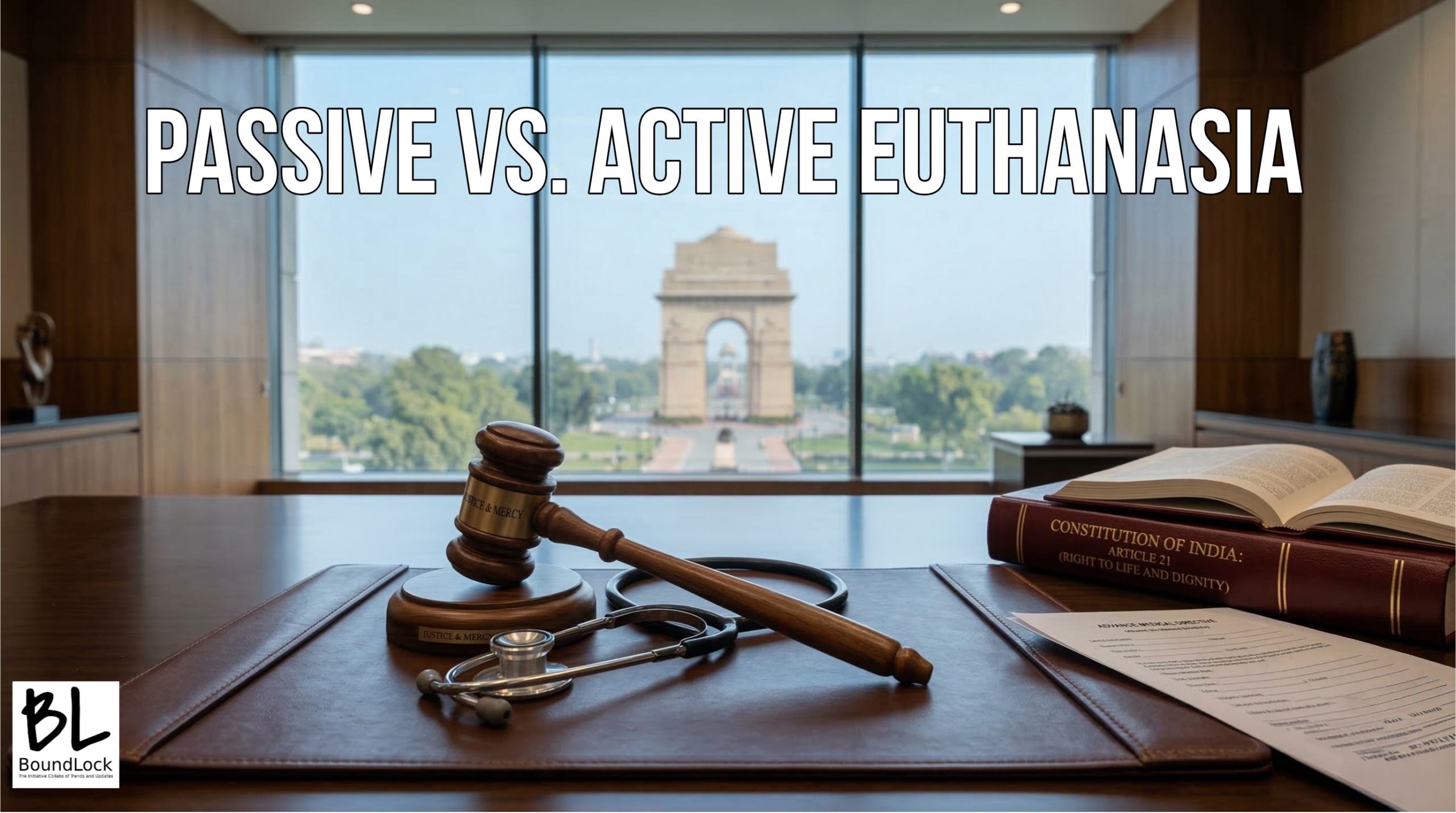
In India, the transition started with the Aruna Shanbaug case (2011) and was solidified by the Common Cause v. Union of India (2018) judgment. The Supreme Court recognized the “Right to Die with Dignity” as an integral part of the Right to Life under Article 21. Passive and Active Euthanasia are the key role in this Article.
In early 2026, the Supreme Court’s ruling in the Harish Rana case marked the first time the court actively implemented these guidelines, allowing the withdrawal of life support for a patient in a permanent vegetative state. This case emphasized that the focus is not on whether death is “good,” but whether continuing treatment serves the patient’s best interest.
Note: Active euthanasia remains a crime under Sections 100 and 101 of the Bharatiya Nyaya Sanhita (BNS), 2023.
Conclusion
The choice between passive and active euthanasia is one of the most profound decisions a society—and an individual—can face. While passive euthanasia is now recognized as a humane legal option in India, active euthanasia remains outside the law, reserved for the few countries that have adopted “Medical Assistance in Dying” (MAID) frameworks.
At BoundLock, we believe that empowerment comes through knowledge. Understanding these differences ensures that you can advocate for yourself and your loved ones with dignity.
Read more news here