
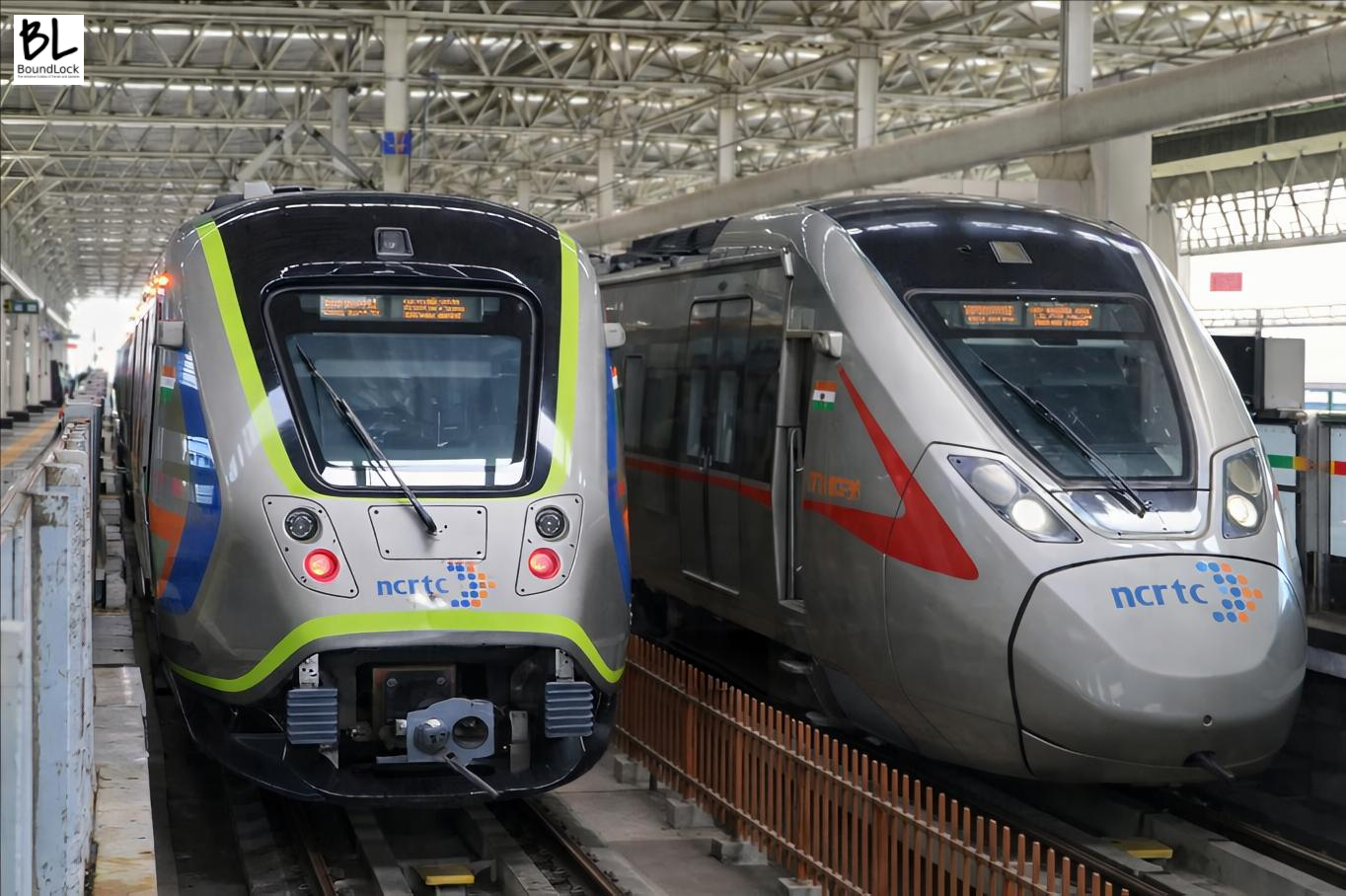
Namo Bharat and Meerut Metro: India’s Fastest 120 kmph Metro Now Live in UP
Are you tired of the endless traffic snarls on the Delhi-Meerut expressway? Do you dream of a commute that is not only fast but also comfortable and reliable? The wait is finally over. The National Capital Region (NCR) has witnessed a monumental shift in its public transport landscape with the full operationalization of the Namo Bharat and Meerut Metro projects.
Inaugurated in February 2026, these twin marvels of modern engineering have redefined regional and urban travel. This isn’t just another train service; it’s a glimpse into the future of integrated transit in India. Let’s dive deep into how the Namo Bharat Regional Rapid Transit System (RRTS) and the Meerut Metro are set to change the way you move.
A New Era of Integrated Transport
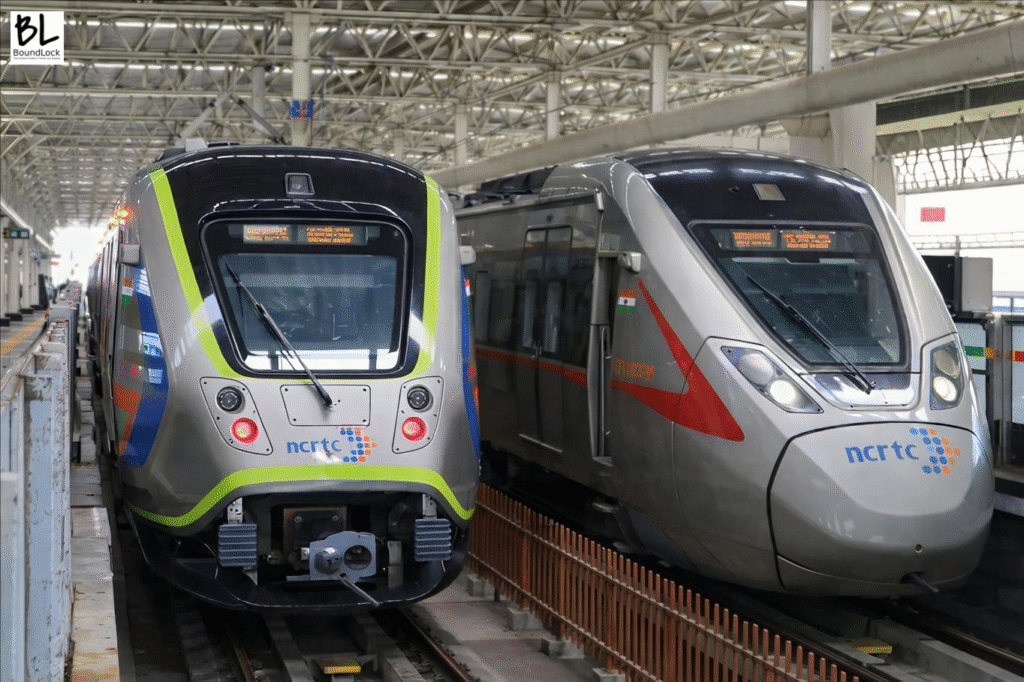
The launch of the full 82.15 km Delhi-Ghaziabad-Meerut RRTS corridor and the 23 km Meerut Metro marks a significant milestone. What makes this project unique is the seamless integration of a high-speed regional rail with a local metro system. The Namo Bharat and Meerut Metro run on the same infrastructure for a significant stretch within Meerut, allowing for easy transfers and a unified travel experience. This innovative approach is a first for India and serves as a model for future urban transport projects across the country.
Namo Bharat RRTS: Delhi to Meerut in Under an Hour
The Namo Bharat, India’s first Regional Rapid Transit System, is designed for speed and long-distance commuters. Imagine traveling from Delhi to Meerut in less than 60 minutes—a journey that could previously take up to three hours by road during peak traffic.
Key Features of Namo Bharat:
- High Speed: With a design speed of 180 km/h and an operational speed of 160 km/h, it is the fastest rapid transit train in India.
- Route & Stations: The 82.15 km corridor originates at Sarai Kale Khan in Delhi and terminates at Modipuram in Meerut. The route includes 16 stations, connecting key urban nodes like Anand Vihar, Ghaziabad, and Modinagar.
- Premium Comfort: The trains are equipped with modern amenities including transverse 2×2 seating, onboard Wi-Fi, laptop and mobile charging points at every seat, CCTV surveillance, and a dedicated premium coach.
- Women’s Safety: Each train has a dedicated coach for women, ensuring a safe and comfortable journey for female commuters.
Meerut Metro: India’s Fastest Urban Transit System
Complementing the regional connectivity of the Namo Bharat is the Meerut Metro. This local transit system is designed to facilitate easy intra-city movement within Meerut, connecting its various neighborhoods to the RRTS network.
Why Meerut Metro Stands Out:
- Unmatched Speed: The Meerut Metro holds the distinction of being India’s fastest metro system, with a maximum operational speed of 120 km/h. It covers its entire 23 km route in just about 30 minutes.
- Stations & Connectivity: The line runs from Meerut South to Modipuram Depot, featuring 13 stations that serve key residential, commercial, and educational hubs.
- Seamless Integration: Four stations—Meerut South, Shatabdi Nagar, Begumpul, and Modipuram—serve as interchange points. Commuters can easily switch between the high-speed Namo Bharat and the local Meerut Metro without leaving the station premises, making for a truly integrated travel experience.
The Game-Changer: Impact on Real Estate and Economy
The operationalization of the Namo Bharat and Meerut Metro is more than just a transport upgrade; it’s an economic catalyst. The improved connectivity has already begun to show a profound impact on the region’s real estate and overall economy.
- Real Estate Boom: Property prices in Ghaziabad and Meerut, particularly in areas within a few kilometers of the RRTS and metro stations, have seen a significant surge, with reports indicating a rise of 30-60%. The corridor is unlocking new land banks, attracting major developers, and fostering the creation of new residential and commercial hubs.
- Transit-Oriented Development (TOD): The project is encouraging TOD, where compact, walkable, mixed-use communities center around high-quality train systems. This will lead to more sustainable urban growth.
- Workforce Mobility: By drastically reducing travel time, the Namo Bharat and Meerut Metro are facilitating reverse migration and enabling people to live in more affordable cities like Meerut while working in Delhi, thus decongesting the national capital.
Practical Information for Commuters
Traveling on this world-class network is designed to be as convenient as the ride itself.
- Ticketing: The system employs an integrated ticketing solution. Commuters can use QR code-based tickets booked via a mobile app or use the National Common Mobility Card (NCMC) for seamless travel across both the Namo Bharat and Meerut Metro, as well as other transport systems like the Delhi Metro.
- Fares: The fare structure is distance-based, making it affordable for daily commuters. Short local trips on the Meerut Metro can cost as little as ₹20-30, while a full end-to-end journey from Delhi to Meerut on the Namo Bharat is priced reasonably, offering exceptional value for the time saved.
Conclusion
The inauguration of the fully operational Namo Bharat and Meerut Metro is a watershed moment for the National Capital Region. It symbolizes a move towards smarter, faster, and more sustainable urban mobility. By shrinking distances and connecting communities, these projects are not just transporting people; they are transporting the entire region into a new era of growth and prosperity.
Have you experienced a ride on the new Namo Bharat or Meerut Metro yet? Share your thoughts and experiences in the comments below! If you found this article helpful, don’t forget to share it with your friends and family who are looking for a better way to travel in the NCR.
Official Websites:
Connect to our News Website: Live Patrika
Latest Posts:
- Faltu Coders
- IPL 2026 Complete Schedule: Full Fixtures, Dates, Venues, Timings & More
- Passive and Active Euthanasia: A Comprehensive Guide to Laws, Ethics, Rights and 2026 Guidelines
- MacBook Neo Apple’s Most Affordable Laptop Ever: Is the $599 Worth It?
- Kolkata Earthquake Today: 5.5 Magnitude Tremors Spark Panic Across West Bengal